


Serving in İzmir, Ear, Nose & Throat specialist Op. Dr. Melih Arif Közen performs functional nasal surgery (septoplasty) for a deviated septum, one of the most common causes of nasal obstruction. Septoplasty is a purely functional surgery, with no aesthetic purpose, in which the deviation in the central partition (septum) that divides the nose into two is corrected to open the airway.
A deviated septum may be congenital or may develop following a blow or trauma. When the deviation narrows the airflow, it leads to complaints such as nasal congestion, sleeping with the mouth open, snoring, postnasal drip and recurrent sinus infections. Because medications and sprays do not resolve this structural problem, lasting relief is achieved through surgery.
A deviated septum is frequently accompanied by enlarged nasal turbinates, and the two can be corrected in the same session. If there is also an aesthetic concern, the procedure can be combined with rhinoplasty to perform a septorhinoplasty.
What Is Septoplasty?
Septoplasty is a surgical procedure in which the deviated portions of the central partition (septum) — made up of cartilage and bone and dividing the inside of the nose into two — are corrected or removed. The aim is to open the narrowed airway and enable comfortable breathing through both sides of the nose. The procedure is performed entirely from inside the nose.
Opening the Airway
The side narrowed by the deviated septum is corrected, providing balanced and comfortable airflow through both nostrils.
Structural Correction
The deviated cartilage and bone sections of the septum are reshaped or removed, creating a straight structure along the midline.
A Scar-Free Method
Because the entire procedure is performed from inside the nose, no external incision or scar remains, and the outer appearance of the nose does not change.
When Is Septoplasty Performed?
Septoplasty comes into consideration when a deviated septum causes complaints that affect quality of life. The most commonly evaluated reasons are as follows.
Persistent Nasal Congestion
One- or two-sided, lasting obstruction that does not respond to medications and sprays, causing sleeping with the mouth open and nighttime awakenings.
Snoring and Sleep Problems
Complaints such as snoring, waking up tired and reduced sleep quality due to a narrowed airway.
Recurrent Infections
Frequent sinusitis attacks, postnasal drip and headaches resulting from impaired drainage caused by the deviation.
A deviated septum may occur on its own or together with enlarged nasal turbinates or chronic sinusitis. In such cases, all of them can be corrected in the same session.
How Is Septoplasty Performed?
The approach used in septoplasty is determined by the location and degree of the deviation. The procedure is performed from inside the nose, and any accompanying problems are corrected in the same session when needed.
Classic Septoplasty
The deviated cartilage and bone sections of the septum, accessed from inside the nose, are corrected or removed. A straight, balanced partition is created along the midline.
Endoscopic Septoplasty
A modern, tissue-sparing method performed under camera guidance, providing a clearer view especially for deviations in the posterior region.
Accompanying Corrections
If needed, turbinate reduction or sinus surgery is carried out in the same session to fully relieve the obstruction.
Preparation Before Septoplasty
A successful septoplasty begins with an accurate diagnosis and a thorough preoperative assessment. At this stage, the degree of the deviation is determined and the necessary checks are carried out so that the operation proceeds safely.
Examination and Assessment
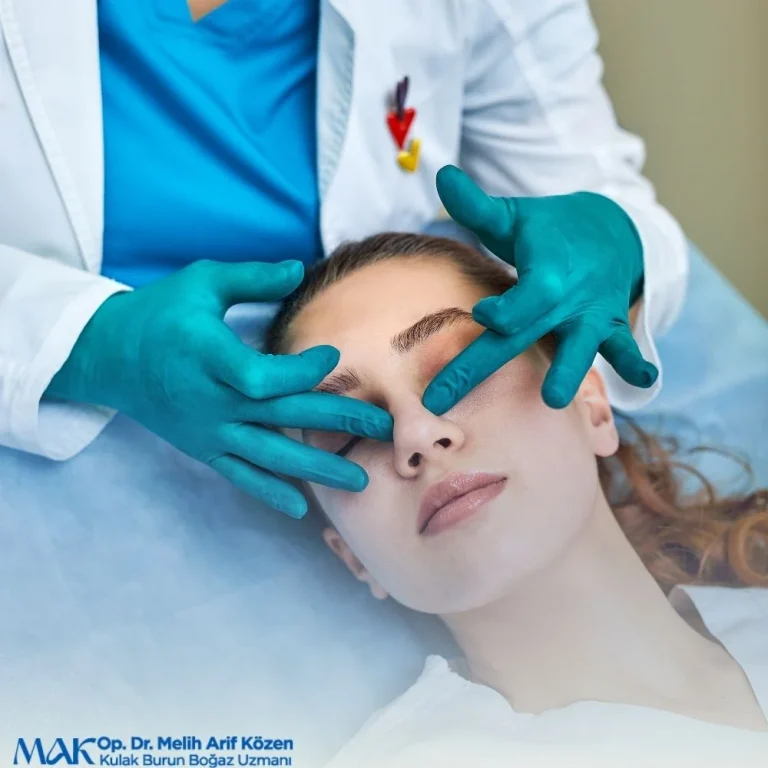
An endoscopic nasal examination determines the location and degree of the septal deviation. Any accompanying turbinate enlargement or sinus problem is identified.
General Health Check
Blood tests are performed; current medications, smoking and blood thinners are reviewed. If there is an active infection, it is brought under control first.
How Is Septoplasty Surgery Carried Out?
Septoplasty is usually performed under general anesthesia, from inside the nose, and takes approximately 30–60 minutes depending on the degree of the deviation. Because there is no external incision, the process is comfortable for the patient and proceeds in distinct stages.
Anesthesia and Preparation
The patient is put to sleep with appropriate anesthesia. The inside of the nose is sterilized and the septum is accessed from within the nose.
Correcting the Deviation
The deviated cartilage and bone sections of the septum are corrected or removed, creating a straight, balanced structure along the midline.
Completion
If needed, a thin silicone splint is placed inside the nose. If there is an accompanying turbinate or sinus correction, it is completed in the same session, and the patient is discharged after a short observation.
Let Us Determine the Right Solution for Comfortable Breathing
You can consult Op. Dr. Melih Arif Közen about your persistent nasal congestion complaints.
Recovery Process After Septoplasty
Recovery after septoplasty is generally comfortable. In the first few days there may be a mild sense of congestion and fullness in the nose; this is due to crusting and swelling and gradually decreases. Following the nasal care instructions speeds up recovery.
The First Week
If present, the silicone splint is removed within a few days. The inside of the nose may crust; regular moisturizing with the saline spray recommended by your doctor is important during this period.
The Following Weeks
Most patients return to daily life within a few days. Full healing of the inside of the nose and completely comfortable breathing may take a few weeks.
Consult your doctor without delay in the following situations:
- Persistent or heavy nosebleeds
- High fever and increasingly severe pain
- Marked redness, discharge or swelling around the nose
- Severe, persistent headache
Related Treatments
Frequently Asked Questions
Will septoplasty change the shape of my nose?
No. Septoplasty is a purely functional surgery; only the deviated partition inside the nose is corrected. The outer appearance of the nose does not change. If a change in shape is desired, this is planned separately together with rhinoplasty.
Will packing be placed in my nose after surgery?
Today, instead of the old painful packing, thin silicone splints that allow breathing through them are generally used. These are easily removed within a few days and cause far less discomfort than before.
When can I return to work?
Most patients can return to desk work within a few days. For heavy physical activity and sports, however, waiting 2–3 weeks is recommended to allow recovery to progress.
Can the deviation recur after surgery?
In a properly performed septoplasty, the corrected area is permanent and the deviation usually does not recur. However, a new blow or trauma may cause the nose to become misshapen again.