



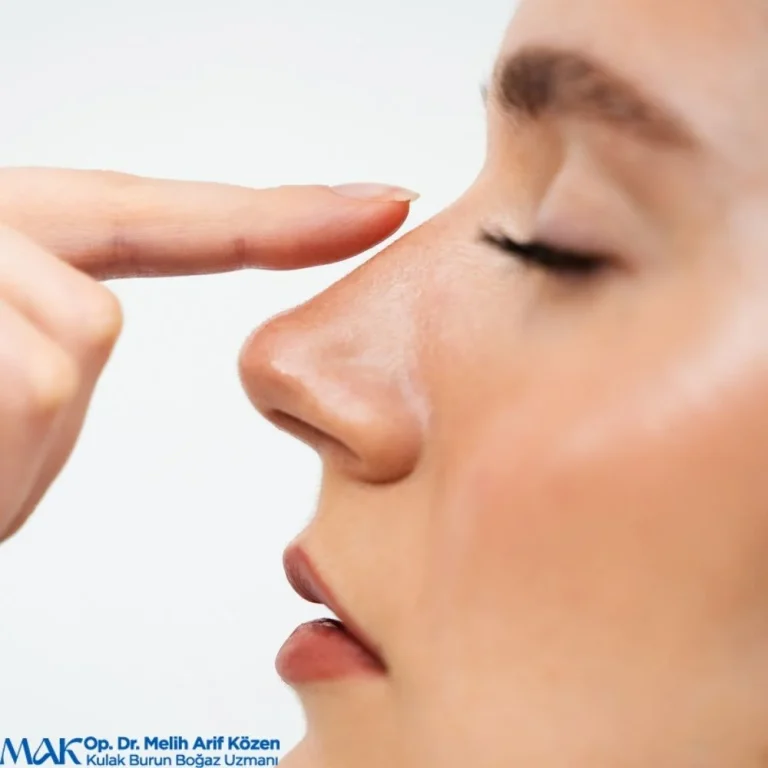
İzmir-based Ear, Nose & Throat Specialist Op. Dr. Melih Arif Közen serves his patients with modern approaches that address both the aesthetic appearance and the breathing function of the nose together in rhinoplasty (nose aesthetics) surgery. Rhinoplasty is a surgical procedure that reshapes the bone and cartilage structure of the nose to achieve a natural appearance in harmony with the facial features.
Because the nose sits at the center of the face, even small changes in its shape noticeably affect the overall expression. For this reason, the goal of a successful rhinoplasty is not a standard nose that looks “done,” but a natural and balanced result suited to the person’s facial proportions, gender and expectations. At the same time, if problems that hinder breathing, such as a deviated septum or turbinate enlargement, are present, these are corrected in the same session, aiming for both an aesthetic and a functional improvement.
Rhinoplasty performed for aesthetic concerns and septorhinoplasty, which resolves a breathing problem, can often be combined in a single surgery. This way, the patient both breathes more comfortably and achieves the desired appearance with a single operation.
What Is Rhinoplasty?
Rhinoplasty (nose aesthetics) is a surgical procedure in which the skeleton of the nose, composed of bone and cartilage, is reshaped so that its size, form and angles are brought into harmony with the facial proportions. The procedure can address not only the external appearance but also, when necessary, the internal structures of the nose; in this way, aesthetics and function are handled together.
Reshaping the Bony Framework
The hump on the bridge of the nose is removed, or a wide bone structure is narrowed, to achieve a smoother profile.
Tip Shaping
The cartilage at the tip of the nose is reshaped, giving drooping, wide or asymmetric tips a balanced appearance.
Breathing Function
If a deviated septum or turbinate enlargement is present, it is corrected; alongside the aesthetics, comfortable breathing is also restored.
Facial Harmony
The new nose is planned in proportion with the forehead, lips and chin lines, giving the face a natural and cohesive balance.
Rhinoplasty can be performed with an open or closed technique. Which technique is suitable is determined according to the existing structure of the nose, the scope of the planned intervention and the surgeon’s evaluation.
In Which Cases Is Rhinoplasty Performed?
Rhinoplasty may be chosen both for dissatisfaction with appearance and for breathing problems. The cases below are the main reasons for which rhinoplasty is most frequently considered.
Aesthetic Concerns
Aesthetic correction is performed in appearance-related situations such as a hump on the nasal bridge, a wide or drooping nasal tip, a nose that looks large, or a shape that is disproportionate to the face.
Breathing Problems
Functional correction is needed in cases that hinder breathing, such as obstruction and snoring due to a deviated septum, turbinate enlargement or weakness of the nasal wing.
Trauma and Deformities
Deviations, collapses caused by a blow or accident, and unwanted results remaining from previous surgeries (revision) can be reshaped.
For rhinoplasty, it is important that the development of the nose and face is complete; for this reason, surgery is generally planned after the age of 18. Correct timing and realistic expectations directly affect satisfaction with the result.
Which Methods Are Used in Rhinoplasty?
There is no single method in rhinoplasty; different techniques are preferred depending on the structure of the nose, the patient’s expectations and the scope of the intervention. The main approaches applied are as follows.
Open Rhinoplasty
It is performed through a fine incision at the tip of the nose, allowing the surgeon to see the nasal structure directly. It is preferred for complex deformities and revision surgeries.
Closed Rhinoplasty
All incisions are made inside the nose, leaving no external scar. For more limited interventions and suitable nasal structures, it offers a shorter recovery time.
Septorhinoplasty
This is the method in which a deviated septum inside the nose is also corrected together with aesthetic correction. It resolves both the appearance and the breathing problem in the same session.
Which method will be applied is determined after examination and imaging. In recent years, with techniques that cause less damage to the bone tissue, such as ultrasonic (piezo) rhinoplasty, less swelling and bruising can be experienced.
Preparation Before Rhinoplasty
A successful rhinoplasty begins with correct planning and evaluation carried out before surgery. At this stage, the patient’s expectations are clarified and the necessary checks are performed to ensure the operation proceeds safely.
Examination and Planning
The nasal structure and breathing function are evaluated, and imaging is performed if needed. The patient’s expectations are discussed, and a realistic plan suited to the facial proportions is created.
General Health Check
Blood tests and necessary examinations are performed. Medications used, smoking and blood thinners are reviewed; the habits that need to be stopped before surgery are explained.
Stopping smoking at least 2 weeks before surgery, as well as medications and herbal products with a blood-thinning effect, speeds up recovery and reduces the risk of bleeding. It is important to follow your doctor’s recommendations on this matter.
How Is Rhinoplasty Surgery Performed?
Rhinoplasty is performed under general anesthesia and, depending on the structure of the nose, generally takes 1.5–3 hours. The process advances through specific stages, from planning to the completion of the surgery.
Anesthesia and Preparation
The patient is put to sleep with general anesthesia. The surgical area is sterilized and the incision areas are marked according to the planned technique.
Reshaping
The bone and cartilage structure is reshaped according to the plan; the hump is removed and the nasal tip is refined. If there is a breathing problem, the septum and turbinates are corrected in the same session.
Closure and Fixation
The incisions are sutured, a silicone splint is placed inside the nose if needed, and a protective splint (cast) is applied externally. After a short period of monitoring, the patient is usually discharged the same day or the next day.
Let’s Determine the Right Method for Your Nose Together
To learn the rhinoplasty approach most suitable for you, you can consult Op. Dr. Melih Arif Közen.
Recovery Process After Rhinoplasty
Recovery is a process that unfolds over time as the body repairs itself. The swelling and bruising seen in the first days are normal and gradually decrease. With proper care, this process is both more comfortable and faster.
The First Week
The splint on the nose and any tampons are usually removed within 5–7 days. There may be swelling and bruising around the eyes; keeping the head elevated and applying cold reduce these.
The Following Weeks
By the end of the first 2–3 weeks, noticeable swelling subsides and you can return to social life. The fine swelling at the nasal tip settling completely and the final result becoming clear, however, can take 6–12 months.
In the following situations, consult your doctor without delay:
- Nosebleeds that do not stop or that increase
- High fever and progressively worsening severe pain
- Marked redness, discharge or swelling at the surgical site
- Sudden, persistent difficulty breathing
For the first few weeks, you need to avoid wearing glasses, heavy sports, and protect the nose from impact. Protection against the sun prevents discoloration after swelling. Following the care instructions given by your doctor directly affects the result.
Frequently Asked Questions
Is rhinoplasty a painful surgery?
Because the surgery is performed under general anesthesia, no pain is felt during the procedure. Afterward, most patients feel a sense of pressure due to nasal congestion rather than pain; this is easily kept under control with the painkillers provided.
When can I return to work and social life after surgery?
After the splint and tampons are removed, you can generally return to social life within 7–10 days. While it is possible to return to desk jobs within a week, it is recommended to wait 4–6 weeks for heavy physical activities and sports.
Is the result of rhinoplasty permanent?
Yes, rhinoplasty results are permanent. The appearance that emerges after the swelling has completely resolved is preserved for life unless a major trauma is experienced. Due to tissue settling, the final result becomes even clearer over time.
Will my breathing problem also be corrected along with the aesthetics?
If you have breathing problems such as a deviated septum or turbinate enlargement, these can be corrected in the same surgery (septorhinoplasty). This way, you both gain an aesthetic appearance and breathe more comfortably.
Will I have a scar on my nose after surgery?
In the closed technique, because all incisions are made inside the nose, no external scar remains. In the open technique, the fine incision scar at the nasal tip fades over time and becomes unnoticeable under normal conditions.